
$24.95
Paperback, 6″ x 9″
337 pages
ISBN 978-1-63381-500-1
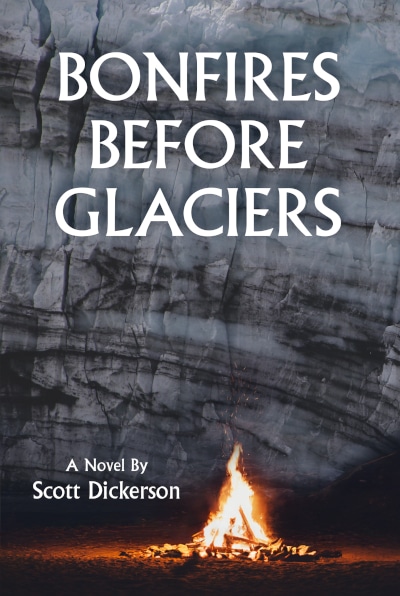
by Scott Dickerson
Millions of young Americans grew up with the political activism of the 1960s, but only two of them dynamited elm trees on their university campus.
Will Barrett, raised on a farm in a very Republican community, was radicalized by the Vietnam War. Frustrated that nationwide protests didn’t stop the war, he and a friend create a scene of war’s devastation. They thought bringing the war home would awaken the university and city.
But their guerilla theater fails to mobilize anyone. The war expands; the return of flag-draped caskets increases. Exhausted by his ineffective fanaticism and alienated, Will wanders without direction or destination.
Eventually he comes to Maine and settles there. Shelling scallops on a dragger was a respite until his captain misjudges the thin margin between safety and disaster on the winter ocean. A chance for free rent on a small farm briefly becomes romance, later tragedy, then opportunity. He immerses his life in his land, a refuge chosen by many disaffected young adults.
When Will meets Serena, she recruits him to fight against a nuclear generator proposed for one of Maine’s largest wild islands. They become partners in the battle and, soon, partners on Will’s farm. Ultimately, they realize they will face one industrial scheme after another. Are they are merely building bonfires before a glacier?
This is a novel about youth, growth, sorrow, disappointment, commitment, love, and joy. Bonfires before Glaciers is also about now and is forever relevant—citizens confronting wrong to advance good.
ABOUT THE AUTHOR
Scott Dickerson writes to bring compelling stories to very different topics. Bonfires before Glaciers is his second novel. Telling Stone, his first, is the story of a paleolithic cave artist set 23,500 years ago. His nonfiction book To Save a River presents a narrative about protecting endangered Atlantic Salmon in a Maine river. During his first career, designing and making furniture, he wrote articles for the journal Fine Woodworking. Throughout, he has lived in locales and absorbed experiences as diverse as his writing.